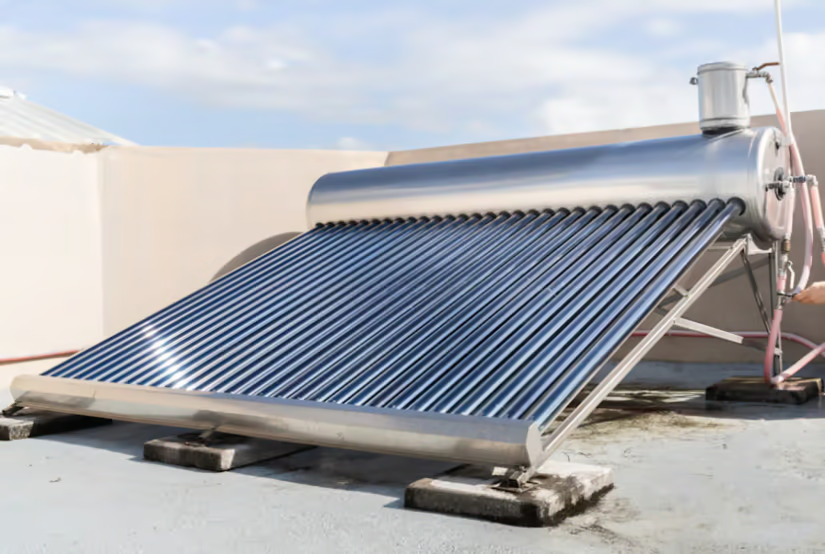
Solar thermal systems convert solar irradiance directly into thermal heat energy for large-scale hot water and industrial process steam. Unlike photovoltaic panels that convert light into electricity and then use resistance heaters, solar thermal delivers 60% to 75% thermodynamic efficiency by heating fluids directly through concentrated collectors or evacuated tube arrays. Scoped exclusively for hotels, hospitals, dairies, chemical processors, and textile mills, solar thermal drastically cuts furnace oil, piped natural gas (PNG), and biomass boiler fuel consumption.






High-vacuum glass tubes providing optimal heat retention.
Borosilicate glass tubes with vacuum insulation minimize convective heat loss in cool or windy conditions. Absorber coatings heat manifold water efficiently for boiler feed preheating and commercial laundries.
Hotels, multi-specialty hospitals, hostels, and commercial food kitchens.
Eliminates convective heat dissipation even in windy climates
Maintains steady thermal delivery for high-volume sanitization
Pressurized circulation loop integrates with central boilers
Achieving dependable 24/7 hot water and steam requires seamless hybrid integration with existing facility boilers.
Pre-Heat Feed Optimization
Pre-heating boiler intake water from 25°C to 85°C eliminates the primary thermal delta, slashing fuel consumption per kilogram of steam.
Double-Walled Insulated Tanks
High-density polyurethane foam (PUF) insulated stainless steel storage tanks prevent nocturnal thermal decay (<2°C loss in 12 hours).
Hybrid Modulating Thermostats
Existing oil, gas, or electrical elements trigger automatically only when sunlight is insufficient, guaranteeing uninterrupted process heat.
| Collector Technology | Operating Temperature | Primary Heat Carrier | Target Industrial Application |
|---|---|---|---|
| Evacuated Tube (ETC) | 60°C - 90°C | Pressurized Water | Hotels, Hospitals, Commercial Laundry |
| Flat Plate (FPC) | 50°C - 80°C | Water / Glycol Heat Exchanger | Dairies, Food Processing, Campuses |
| Concentrated Parabolic (CST) | 120°C - 200°C | Pressurized Steam / Thermic Fluid | Textile Dyeing, Chemical Process, Steam Boilers |
| Solar PV + Electric Geyser | 60°C - 75°C | Electricity Conversion | Small residential (suboptimal for MW scale) |