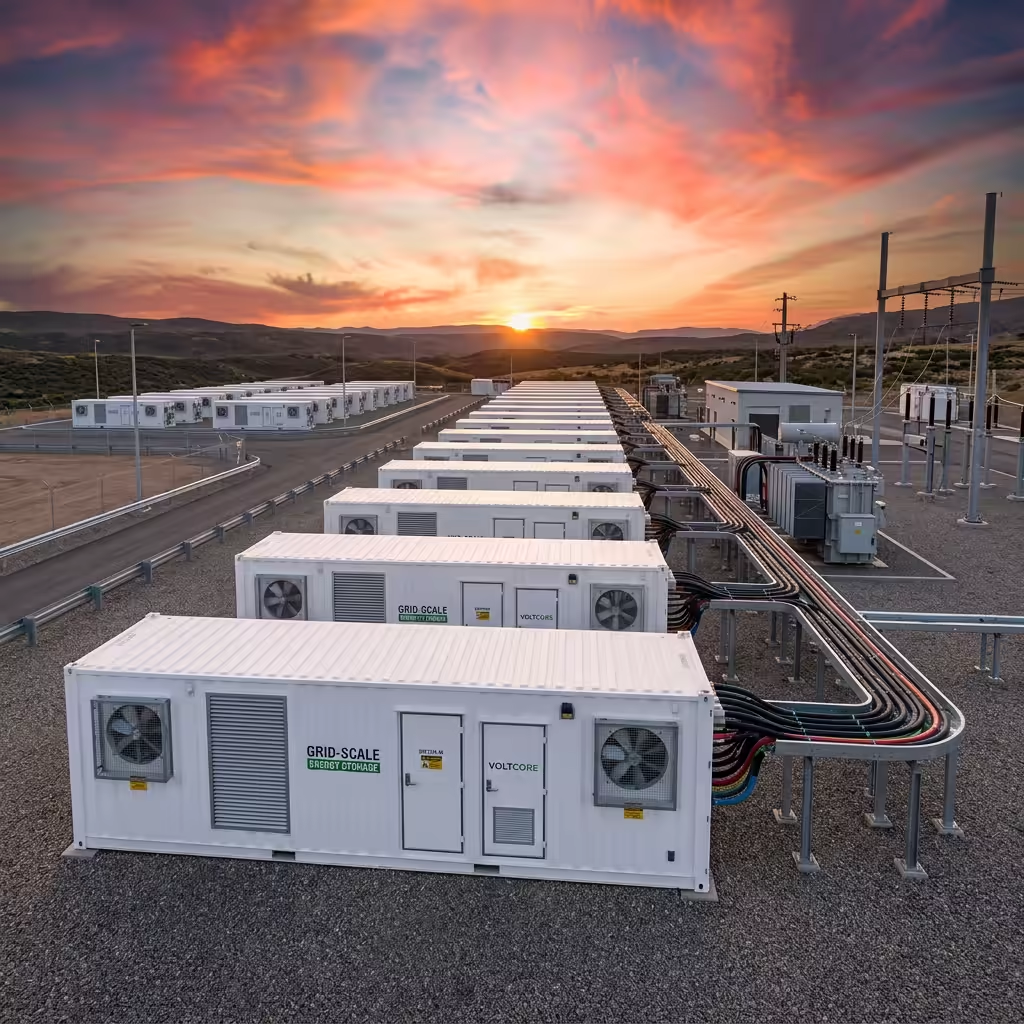
A Battery Energy Storage System (BESS) captures electrical energy generated from solar or the grid during low-cost or surplus hours and discharges it precisely when demand peaks, tariffs escalate, or the utility grid fails. Engineered around Tier-1 Lithium Iron Phosphate (LiFePO4 / LFP) chemistry, liquid cooling, and intelligent Energy Management Systems (EMS), BESS transforms intermittent solar PV into firm, dispatchable, and blackout-proof power for industrial and commercial facilities.



Discharge stored energy during 15-minute billing peaks.
Industrial consumers pay steep monthly recorded maximum demand (kVA) charges. BESS automatically discharges during facility peak loads, flattening spikes and preventing expensive contract demand penalties.
Automotive plants, metal forges, plastic extrusion, and facilities with sharp motor start surges.
Triggers discharge within milliseconds of peak threshold breach
Reduces recorded maximum demand billed by the electric utility
High-discharge capability handles sudden heavy industrial loads
A commercial BESS integrates precision hardware and software subsystems to safeguard asset longevity.
LiFePO4 Thermal Stability
Lithium Iron Phosphate cells eliminate thermal runaway risks and provide 6,000+ full charge/discharge cycles at 80% DoD.
Millisecond Power Conversion
Bidirectional power conversion systems (PCS) coordinate seamlessly with cloud Energy Management Systems for predictive dispatch.
Uniform Thermal Control
Integrated liquid cooling loops maintain optimal 25°C cell temperatures, maximizing warranty life in high Indian ambient heat.
| Technology Parameter | LFP (Lithium Iron Phosphate) | NMC (Nickel Manganese Cobalt) | Lead-Acid / VRLA |
|---|---|---|---|
| Cycle Life (80% DoD) | 6,000 - 8,000 Cycles | 2,500 - 4,000 Cycles | 1,200 - 1,800 Cycles |
| Thermal Runaway Risk | Extremely Low (Stable up to 270°C) | Moderate (Requires heavy cooling) | Low (Hydrogen gas risk on overcharge) |
| Round-Trip Efficiency | 90% - 94% | 92% - 96% | 70% - 80% |
| Best Industrial Fit | C&I Peak Shaving & Microgrids | Electric Vehicles & Portable Tech | Legacy low-cost UPS systems |