Commercial facilities with large rooftop solar plants operate under the Net Billing (Gross Feed-in) framework established by state electricity regulatory commissions (MERC in Maharashtra). Unlike residential 1:1 net metering, net billing tracks imported and exported energy at different financial valuations: power imported from the grid is billed at full commercial slab tariffs, while surplus solar power exported to the grid is credited at the DISCOM Average Power Purchase Cost (APPC) rate.




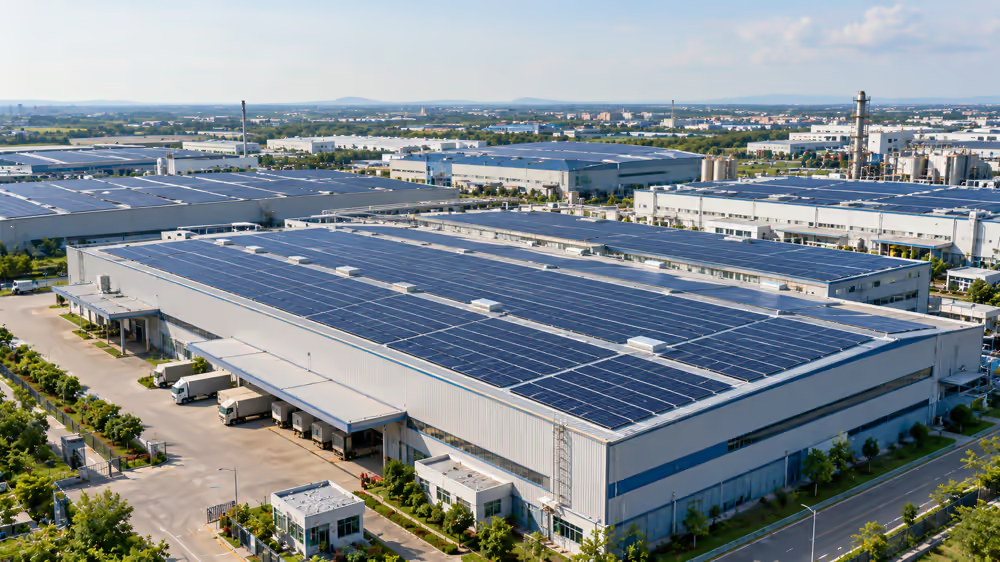
Dual tariff structure for large commercial solar plants.
Imported units are billed at commercial retail rates (e.g. ₹12.50/unit), while exported surplus units are credited at the DISCOM APPC rate (typically ₹3.00 - ₹3.50/unit). Sizing the plant to maximize direct daytime self-consumption delivers maximum financial returns.
Commercial buildings, colleges, and malls with system capacities exceeding standard net-metering thresholds.
Displaces ₹12.50/unit commercial rate during self-consumption
Exported units converted to monetary credit at APPC rate
Financial credits offset monthly grid fixed demand charges
Because exported energy is credited at lower APPC rates, engineering systems under Net Billing requires precision load profiling rather than oversizing arrays.
Match Daytime Baseline Demand
Size the solar installation around your commercial facility lowest regular daytime load (e.g. non-peak weekdays), ensuring 85%+ of power is self-consumed.
Synchronize Chiller Pre-Cooling
Pre-cool commercial buildings during peak solar hours (11:00 AM to 2:00 PM) to absorb solar generation directly and lower afternoon grid draw.
Battery Energy Storage Layer
Incorporate battery storage to store surplus weekend solar generation for Monday morning peak shaving rather than low-value APPC export.
| Parameter | Commercial Net Billing | Standard Net Metering | Zero-Export Installation |
|---|---|---|---|
| Capacity Limit | Above 1 MW or DISCOM slab | Up to 1 MW (DISCOM cap) | No statutory capacity limit |
| Imported Energy Rate | Commercial slab (₹12 - ₹14/u) | Commercial slab (₹12 - ₹14/u) | Commercial slab (₹12 - ₹14/u) |
| Exported Energy Rate | DISCOM APPC rate (~₹3.20/u) | 1:1 retail unit credit | Zero export permitted |
| Bi-directional Meter | Mandatory with Net Billing PPA | Mandatory with Net Meter PPA | Standard meter + reverse relay |
| Optimal Sizing Strategy | Match daytime baseline load | Match annual net energy units | Match peak instantaneous load |