
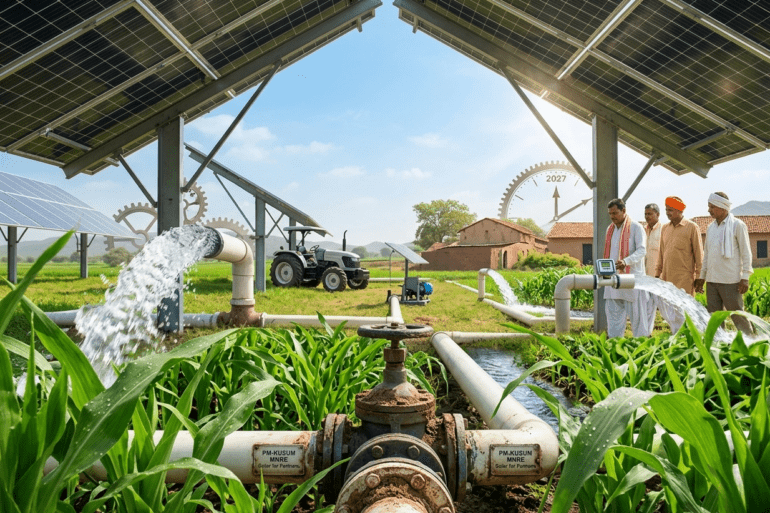
PM-KUSUM deadline pushed to March 2027 — here’s the real story behind it
If you’ve been following India’s solar push for farmers, you already know PM-KUSUM was a big deal. But rolling out a scheme this massive across every corner of the country? That’s never simple. MNRE recently set a new deadline for the program — March 31, 2027 — and we think it’s a decision worth understanding properly.
A quick background on PM-KUSUM
Launched back in 2019, PM-KUSUM was built around one core idea — give Indian farmers access to affordable solar power so they aren’t dependent on diesel pumps or expensive grid electricity. The scheme covers three things: solar-powered water pumps for irrigation, small solar plants on uncultivated land that farmers can lease out, and solarising existing grid-connected pumps. Done right, it means lower costs, a steady extra income, and real energy independence for farmers.
2019When it all started |
2027Revised completion year |
3 crore+Pumps in the target |
Why was an extension needed?
In short, the ground reality was tougher than the plan on paper. A handful of connected problems kept slowing things down across states:
- State-level execution lagged behind: Approvals, tenders, and local infrastructure readiness varied wildly from state to state. Some moved fast, many didn’t.
- The message didn’t reach far enough: In many rural pockets, farmers had never even heard of the scheme — let alone knew how to register or apply for it.
- Upfront cost remained a barrier: The subsidy helps a lot, but farmers still need to arrange their own contribution. For many smallholders, that’s genuinely difficult.
- Equipment didn’t always show up on time: Solar modules, pumps, and trained installation crews weren’t always available when and where they were needed.
- Too many cooks in the kitchen: Getting DISCOMs, government bodies, and private vendors to move together in sync proved harder than expected in practice.
- COVID threw a long shadow: Two years of pandemic disruption set back field operations, manpower, and logistics in ways that took a long time to recover from.
What the extra time is meant to fix
The extension isn’t just buying time — it’s meant to address the actual gaps. The focus now shifts to completing installations that stalled midway, reaching farmers who were missed in the first wave, building stronger local awareness, and tightening coordination between agencies. The endgame is fewer diesel pumps, less strain on state electricity subsidies, and a bigger dent in India’s rural carbon footprint.
Who stands to gain?
For Farmers
- A real second chance to apply and benefit
- Meaningful cut in irrigation running costs
- Option to earn by feeding power back to the grid
- Less dependency on monsoons and power cuts
For the Solar Industry
- Extended demand for panels, pumps, and EPC work
- Deeper reach into underserved rural markets
- More stable project pipelines to plan around
- Room to build trust and presence at ground level
The bigger picture
India’s renewable energy ambitions are large, and they only work if the benefits reach down to the last farmer in the last village. PM-KUSUM is one of the most direct ways to make that happen. Giving it more runway isn’t admitting failure — it’s being realistic about how long genuine change takes, and making sure the investment already put in actually delivers results.
At Chirayu Power, we see the PM-KUSUM extension as a positive signal.
The government is choosing to get it right over getting it done fast. For farmers, that means a genuine opportunity is still very much on the table. For the solar industry, it means continued momentum in a market that matters. If you’re a farmer looking to understand your options under this scheme, or a business exploring rural solar projects, now is a good time to act.